


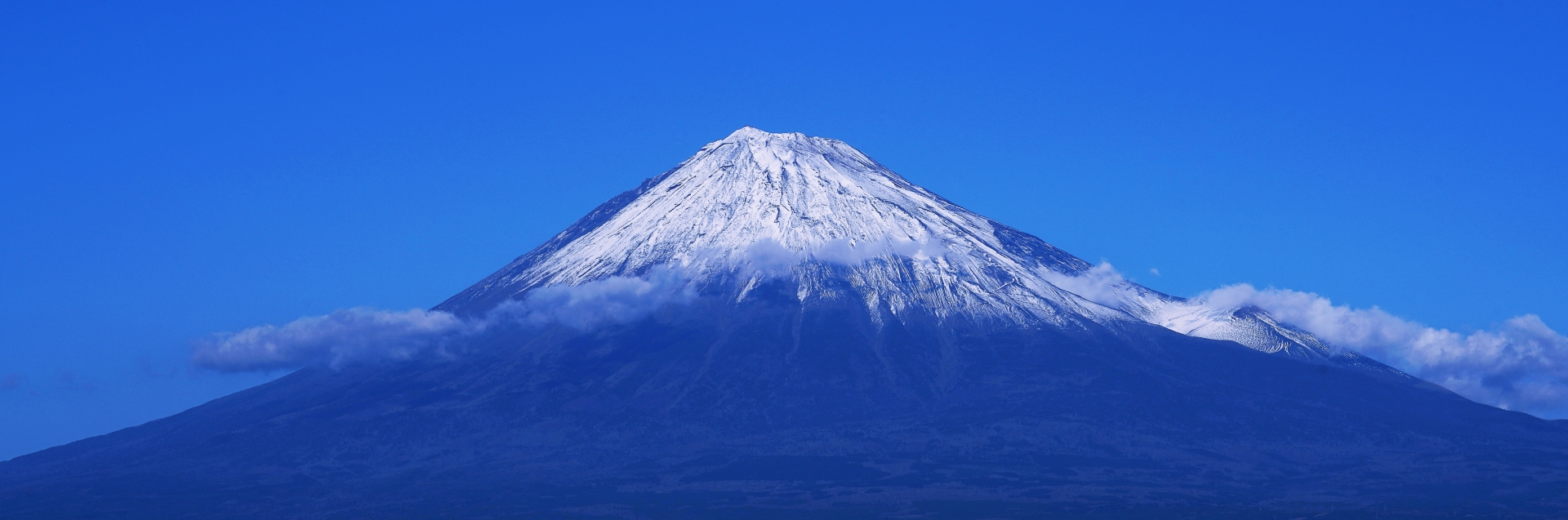
Since I just climbed Mt. Fuji for the first time, I thought I’d take a moment to reflect on the experience.
My hiking experience before this was limited to a few trails around 1,000 meters.
This time, I joined the trip through Sunshine Tour.
From what I saw, about 80% of the participants came in pairs, but I think solo travelers can also feel comfortable joining.
There were many people from overseas as well, so if you speak English or Chinese, you’ll probably enjoy chatting with other climbers along the way.
Table of Contents
Packing list
All of the items listed above are essential, so I highly recommend bringing everything.
Rental gear available
-
Rainwear (jacket and pants)
-
Backpack (with a rain cover)
-
Hiking boots (with hiking socks)
-
Trekking poles
-
Headlamp (for night climbing)
-
Gaiters (to keep out sand and gravel around the ankles)
-
Fleece jacket
-
Trekking pants
-
Performance tights
-
Knee supports
-
Outer gloves (I used work gloves, but they might not be ideal in the rain)
-
Hat (for sun and wind protection)
Prepare on your own (if needed)
-
Smartphone
-
Portable battery charger
-
Watch (My Apple Watch achievement badges went crazy! )
-
Wallet
-
It’s helpful to have around 30 ¥100 coins and a few ¥1,000 bills.
-
For example, renting a helmet at the 6th station required a ¥2,000 deposit.
-
-
Water
-
I brought two 500ml bottles, but drank them all on the way up.
-
You can buy drinks on the mountain, but they cost around ¥500–¥600 each.
-
-
Snacks / high-calorie food
-
I brought candy, but many people had things like CalorieMate or energy bars.
-
-
Trash bag
-
There are no trash bins along the trail, so bringing your own bag is a must.
-
-
Sunglasses
-
Face mask
-
Towel
-
Toothbrush (Note: toothpaste is not allowed in the mountain huts)
-
Medicine
-
Earplugs / sleep mask (for staying in the mountain hut)
Day 1
6:40 — Tokyo Station 7:00 — Yokohama Station 7:30 — Shinjuku Station
The buses from Shinjuku, Tokyo start running from July 1st, and from Yokohama from July 10th.
Since I rented most of my climbing gear, I didn’t have any luggage to put in the bus’s storage compartment.
There are also routes that go via Fuji Station or from the Kansai area.
11:30 Arrival at Fuji Subaru Line 5th station
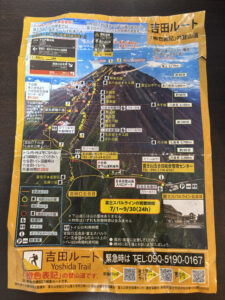
I joined the climb via the Yoshida Route, so I arrived at the Yoshida Trailhead. Apparently, about 60% of climbers use this route.
I think its popularity comes from starting at around 2,300 meters and having many mountain huts along the way.
Other routes include the Fujinomiya Route, Subashiri Route, Gotemba Route, and Prince Route.
There was a lot to do before 12:20, so it was quite hectic.
- Rent climbing gear.
- Leave items you don’t need on the mountain in a coin locker (locker fees ranged from about 400 to 600 yen depending on size).
- Change clothes.
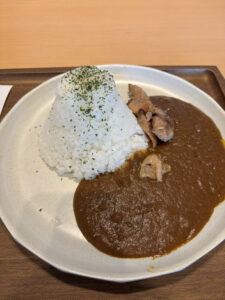
- If you have a lunch option, eat lunch in the dining hall.
The tour menu included curry, udon, and soba.
-
At the information desk, I paid a 4,000 yen climbing fee and received a wristband for entry.
Apparently, it was 2,000 yen in 2024.
12:20 Departure from Fuji Subaru Line 5th Station
We gathered in front of the poles, listened to the briefing, and got pumped up to start the climb!
13:25 6th Station
Up to this point, it felt like a warm-up.
You can take a restroom break and rent helmets here. Since helmets help protect against falling rocks and aren’t heavy, it’s a good idea to wear one.
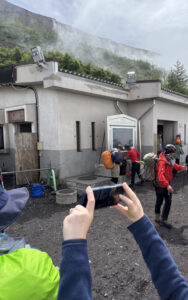
Helmet rental required a 2,000 yen deposit, and I received a souvenir when I returned it.
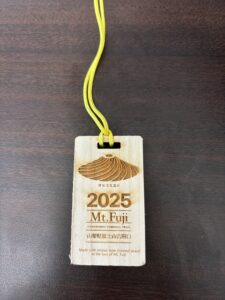
15:00 7th Station (Hinodekan)
The rocky terrain started to increase. People differed on whether to use trekking poles or not.
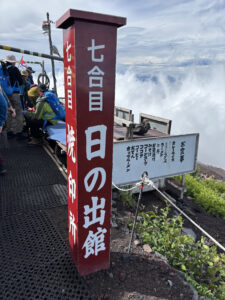
16:20 Midway up the 7th Station
We took a restroom break. It was chilly, so I put on my fleece jacket.
18:00 8th Station (Houraikan)
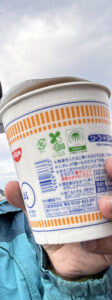
We took a break to eat Cup Noodles. It cost 800 yen, but ramen tastes extra special when eaten on the mountain.
Since it was cold, I put on my rainwear and other layers to stay warm.
19:40 Main 8th Station (Goraikokan)
Arrived at today’s lodging.
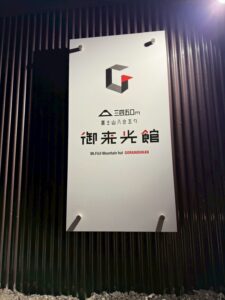
The sun set while we were on the way, so we put on our headlamps partway through and took a break.
The distance from Fuji-san Hotel to Goraikokan felt quite long.
After putting away my shoes and dropping off my gear, it was time for a quick dinner!
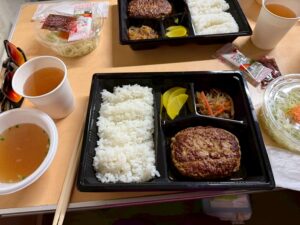
20:15 Rest and preparation for tomorrow
I was told that paying 300 yen allows unlimited use of the toilets.
While using the restroom and brushing my teeth (toothpaste is not allowed), I enjoyed the night view and organized my gear.
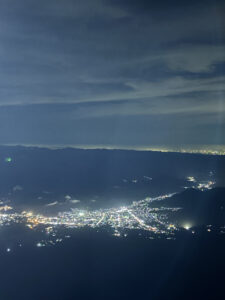
21:00 Lights out
Since we had to wake up at 2:30 AM and depart by 3:00 AM the next day, I went to sleep right away.
Some people used oxygen tanks to help prevent altitude sickness while sleeping. In fact, there were a few who seemed to struggle with it during the climb.
Day 2
2:45 Wake-up
Yes, I overslept. When I woke up, the alarm was ringing but at a volume too low to hear, and the common areas were already bright. Since it’s wake-up time for everyone, I think the alarm volume should be louder without hesitation.
I hurried to get ready and made it just in time for the 3:00 AM meeting. I downed a canned coffee I had brought with me in one go.
3:00 Departure
After a roll call, we set off.
It was really cold, so I think full cold-weather gear is definitely the way to go.
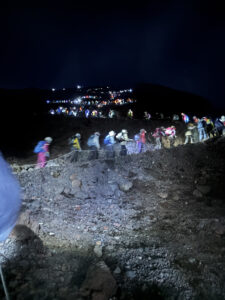
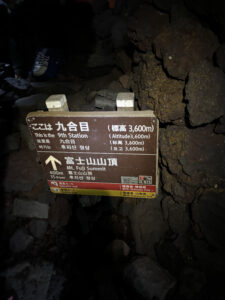
3:40 Passed the 9th Station
A sign let us know we had reached the 9th Station. There wasn’t a hut or any official break here. Since the trail was crowded, we took breaks during the standstills.
At one point, someone called out for us to walk in two lines. If you're part of a group, be careful not to get separated.
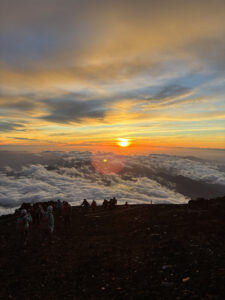
4:20 Summit Arrival and Sunrise
Sunrise was expected around 4:50 AM, and we made it just in time.
I had been worried since it was cloudy the day before, but thankfully the sky cleared up.
It was absolutely beautiful and truly moving.
4:50 Crater Rim Walk
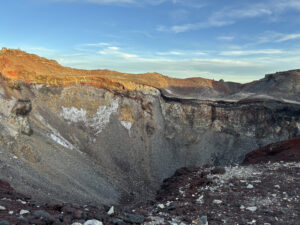
Participation in the crater rim walk (Ohachi Meguri) was optional, so the group split into two. Since I definitely wanted to do the Ohachi Meguri, I joined that group.
5:20 Break
I ate the legendary Mt. Fuji anpan (sweet red bean bun) I bought at the Tomoe Hut at the 8th station. It cost 400 yen.
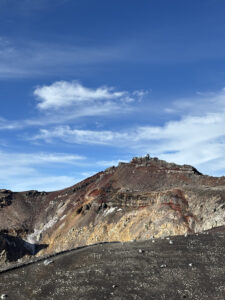
5:50 Kengamine
Reached the summit marker at the highest point.
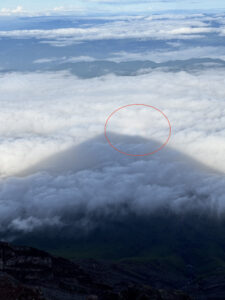
6:10 I was able to see the “Kage Fuji” (Shadow of Mt. Fuji) and the Brocken spectre phenomenon.
Beautiful!
7:00 Yamaguchiya
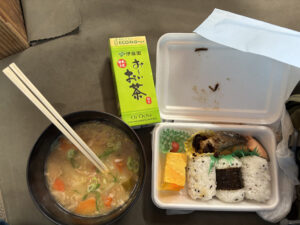
I bought tonjiru (pork miso soup) for 1,000 yen and ate it together with the bento I had at Goraikokan.
It was incredibly comforting and satisfying.
I prepared my gaiters to get ready for the descent.
7:20 Start of the descent
On the descent trail, we walked downhill landing on our heels first.
It got warm along the way, so I took off my cold-weather gear.
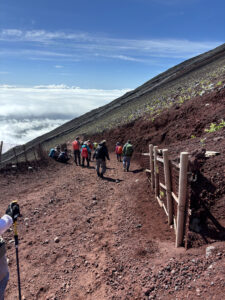
11:20 Arrived back at Fuji Subaru Line 5th Station
Checked in on the arrival list, took out my luggage, changed clothes, and returned the rental gear. I also bought some souvenirs.
Since arriving late can get hectic, those who did the crater rim walk (Ohachi Meguri) were advised to hurry up their descent.
12:15 Gathering
After confirming everyone was on board, the bus departed at 12:30. I slept soundly until we arrived.
13:15 Arrived at Hana no Yu
There were various baths, and it felt really relaxing.
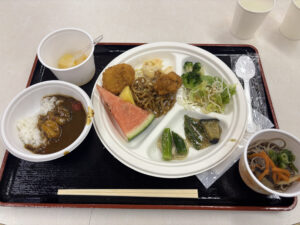
I enjoyed the sauna and replenished my energy with a buffet meal.
The bus departed at 3:00 PM.
17:00 Arrived at the drop-off point
That’s all for the itinerary. Thank you for reading, and great job sticking with it!

